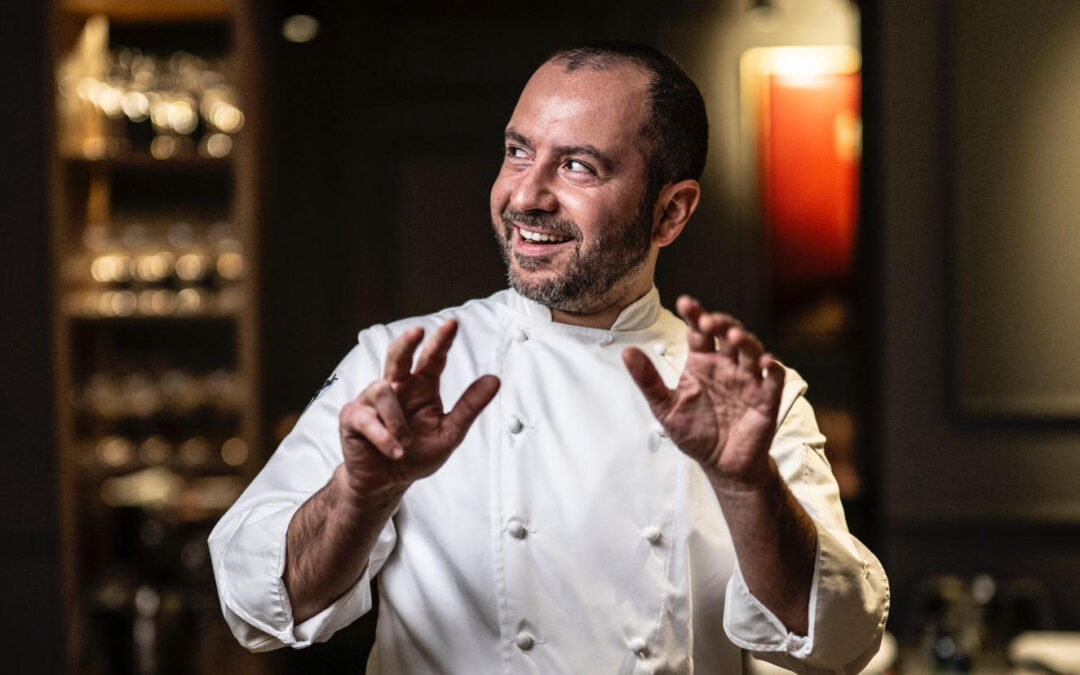
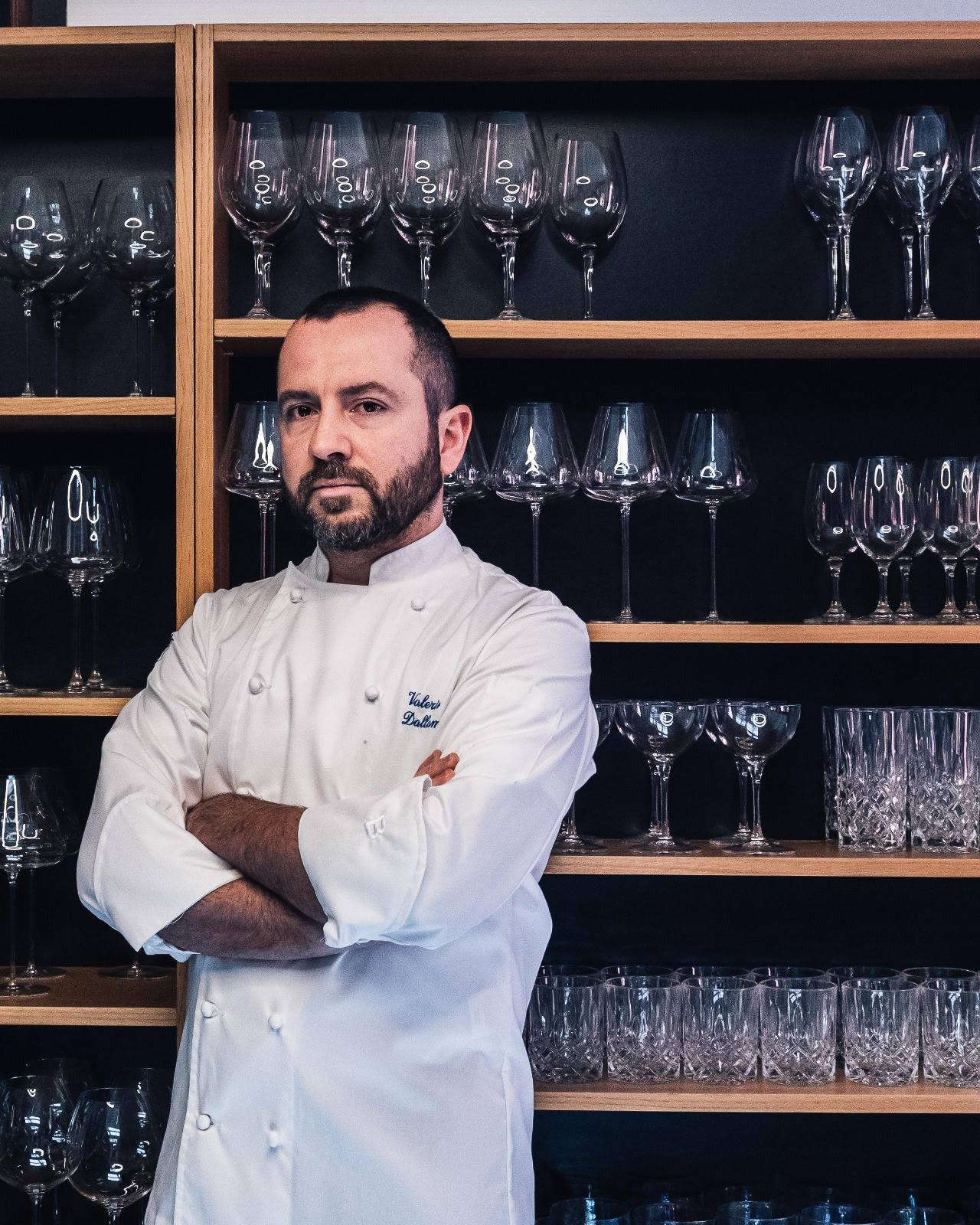
Born in Brescia, Chef Dallamano began his professional journey studying Chemistry and Pharmaceutical Technologies before pursuing his true passion, the culinary arts. Chef Dallamano honed his craft over the next 15 years, training in some of the most celebrated Michelin-starred kitchens in Italy and Europe alongside renowned chefs Arnould Bignon, Massimiliano Alajmo, and Emanuele Scarello. His talent and dedication earned him the highest accolades, including a Michelin star at Wistèria Restaurant in Venice.
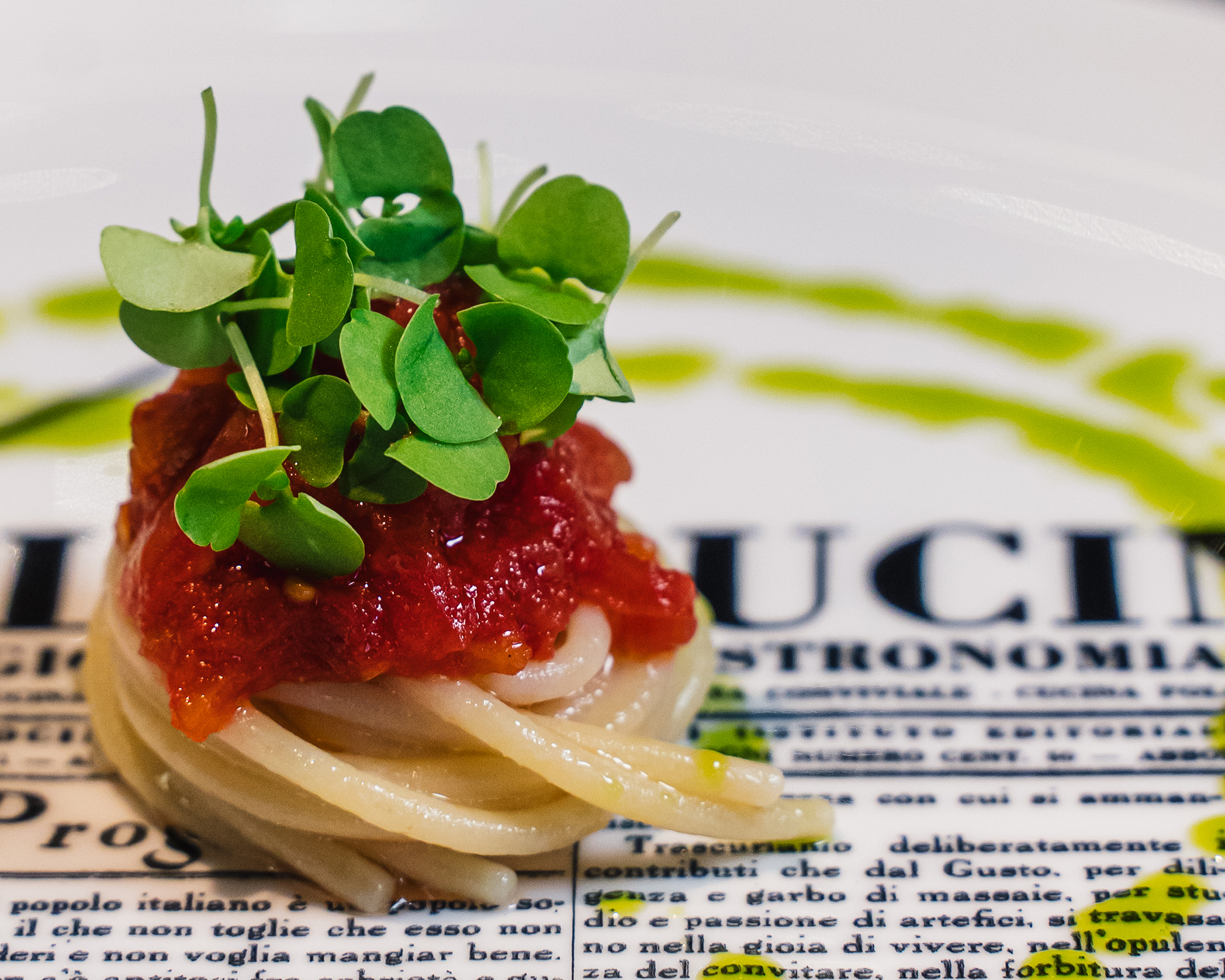
Spaghetto-pomodoro
Chef Dallamano brings to Grand Hotel Fasano a refined approach that balances creativity, tradition, and local inspiration. At Magnolia and Osteria Il Pescatore, he will introduce menus that celebrate the bounty of Lake Garda, emphasising seasonal
ingredients, artisanal products, and contemporary techniques that elevate the region’s culinary heritage.
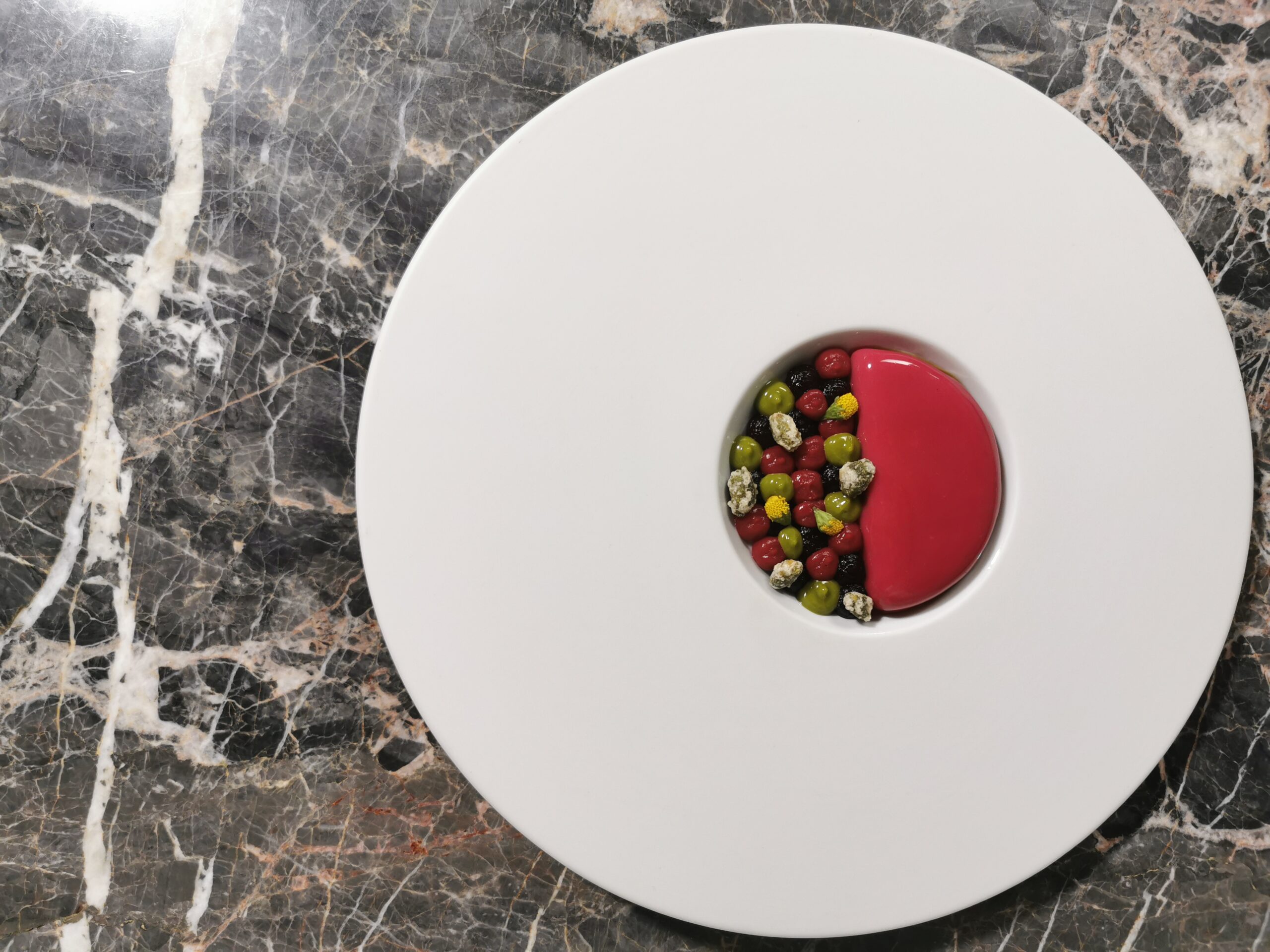
Barbabietola-pistacchio-e-melograno
“Valerio Dallamano’s remarkable skill, passion, and understanding of both traditional and modern Italian cuisine make him the perfect addition to our culinary team,” said Daniele Lozito, Food & Beverage Manager at Grand Hotel Fasano. “I am honoured to join Grand Hotel Fasano and lead the kitchens at Magnolia and Osteria Il Pescatore,” said Chef Valerio Dallamano. “Returning to my hometown and sharing a new culinary perspective with our guests is a dream come true.”
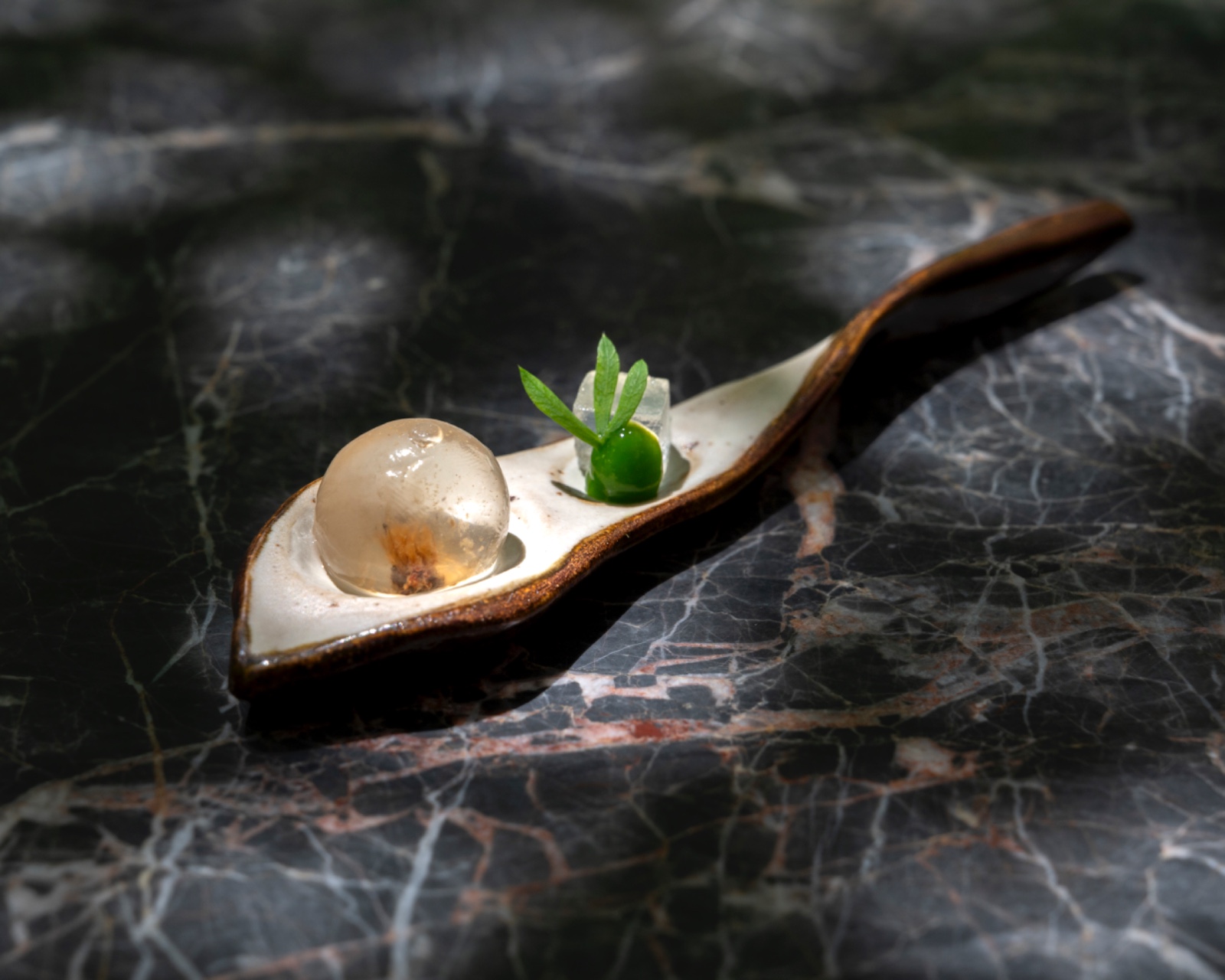
Martini-cocktail-alla-salicornia
Chef Dallamano’s appointment coincides with Grand Hotel Fasano’s seasonal reopening on 27 th March, 2026, when he will also unveil refreshed menus at Magnolia and Osteria Il Pescatore, further elevating the hotel’s reputation as one of Northern Italy’s premier gastronomic destinations. Chef Dallamano joins the distinguished culinary team at Grand Hotel Fasano, alongside Chef Maurizio Bufi of the one-Michelin starred Il Fagiano and Bar Manager Rama Redzepi. In a historic first, Grand Hotel Fasano will remain open through the holiday season this year, staying open until January 6, 2027.
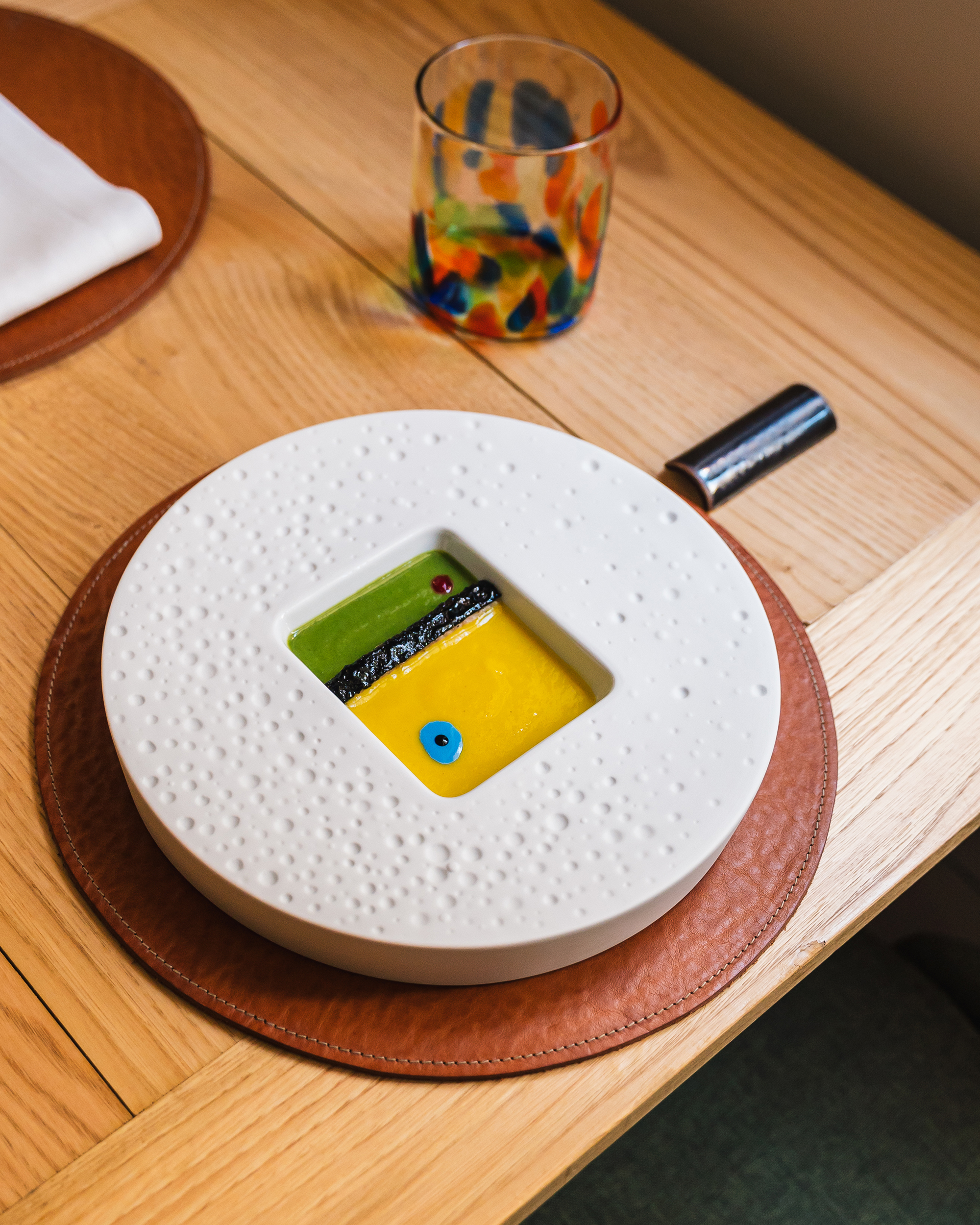
Joan-Miro
Do you have a favourite time of the year or set of ingredients that you look forward to working with?
Time is one of the most important elements in cooking. Waiting is part of this cycle. How wonderful it is to refrain from using a tomato for months, to wait for it to grow and ripen, to cut it and savour it at the right moment. A full, vibrant flavour, a wait that amplifies the sensations. Every season is special and brings aromas, scents, flavours and textures. In spring, I love using wild herbs; in summer, tomatoes; in autumn, pumpkins; and in winter, radicchio.
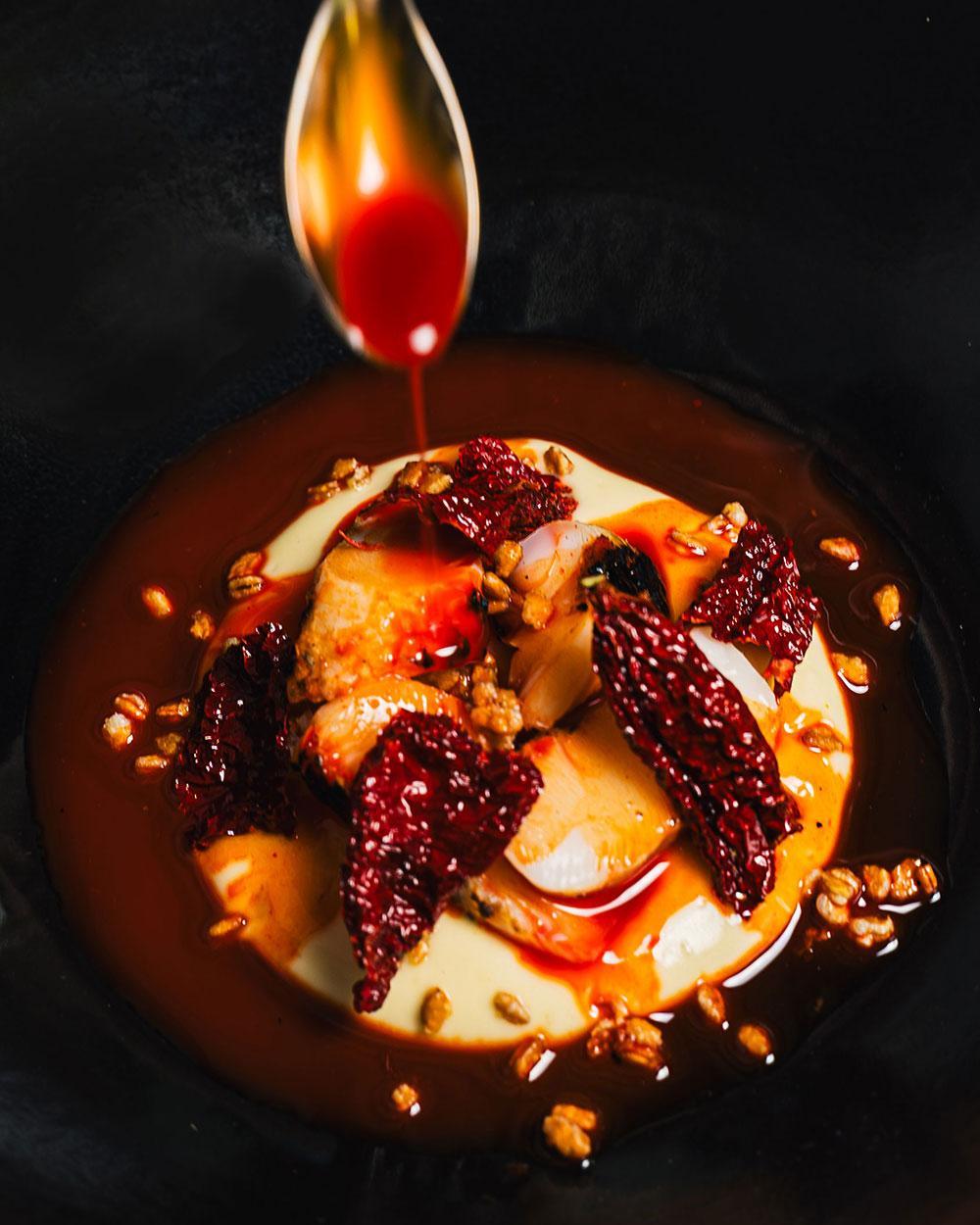
Latti-di-seppia-peperoni-e-monococco
What would you do if you weren’t a chef?
I was fortunate enough to choose my profession and turn it into my passion. Perhaps I would have continued my studies in pharmaceutical chemistry and pursued that path professionally. Or I might have done something more human and hands-on. I would also have liked to take part in a Christian mission in Africa. There is a proverb that says, “History is not made with ifs and buts,” meaning that you cannot change the past and speculating about what might have been is pointless.
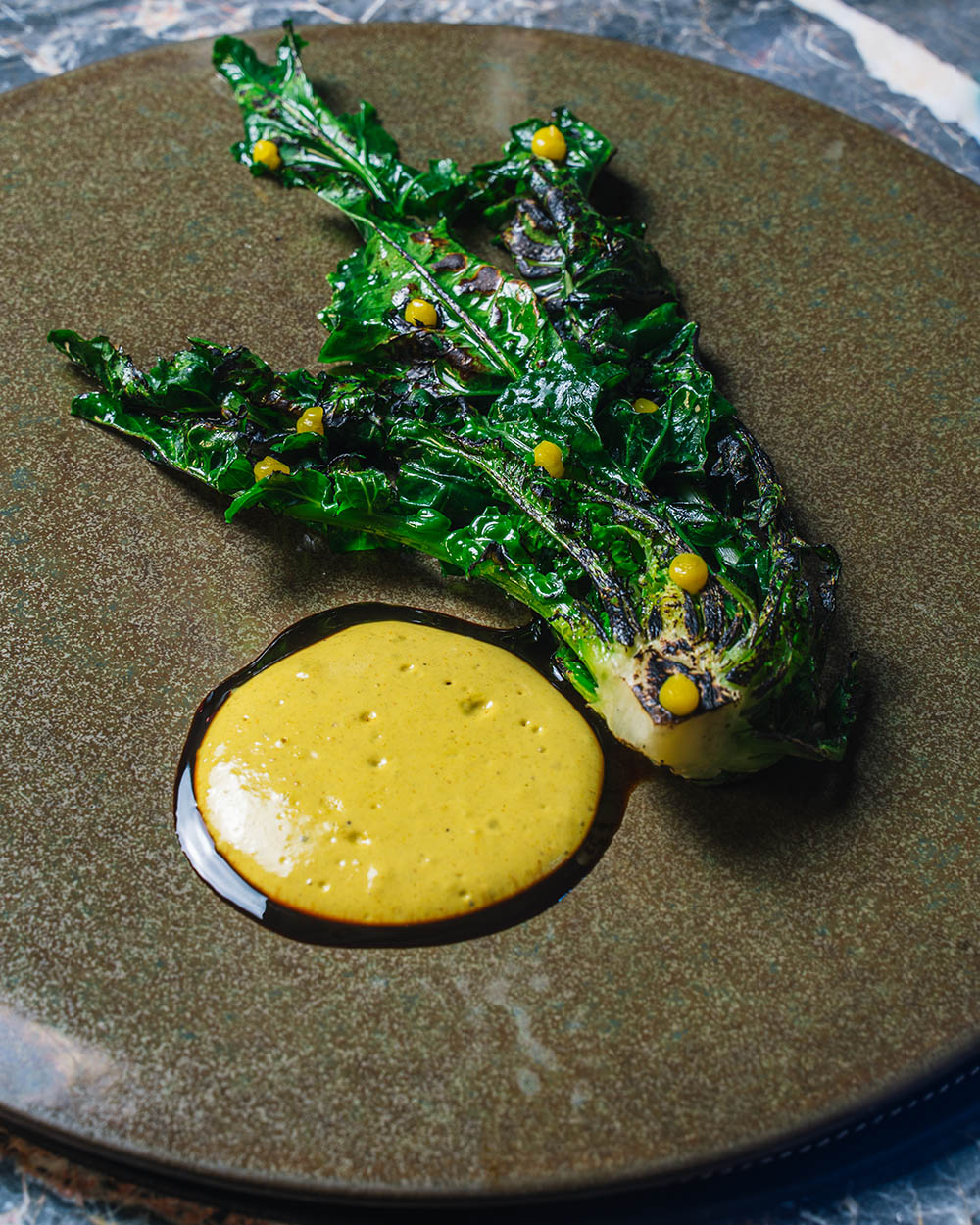
Broccolo-fiolaro-canapa-verza-annerita-e-sudachi
Do your personal preferences influence the menu at all?
In my view, a chef must have something to say, something to express, a story to tell through his dishes in order to truly do his job well. Otherwise, it becomes merely an exercise in style. So yes, absolutely. My personal preferences influence the menu.
What do you think is the most over-hyped food trend currently?
Franchising and rumours.
The desperate need for something new in haute cuisine, along with the vanity often associated with fine dining among amateurs, has created distortions that have little to do with food itself. This has led to a certain disillusionment with new openings and restaurants in general, prompting customers to choose franchises or base their decisions on rumours that are often driven by trends and populism.
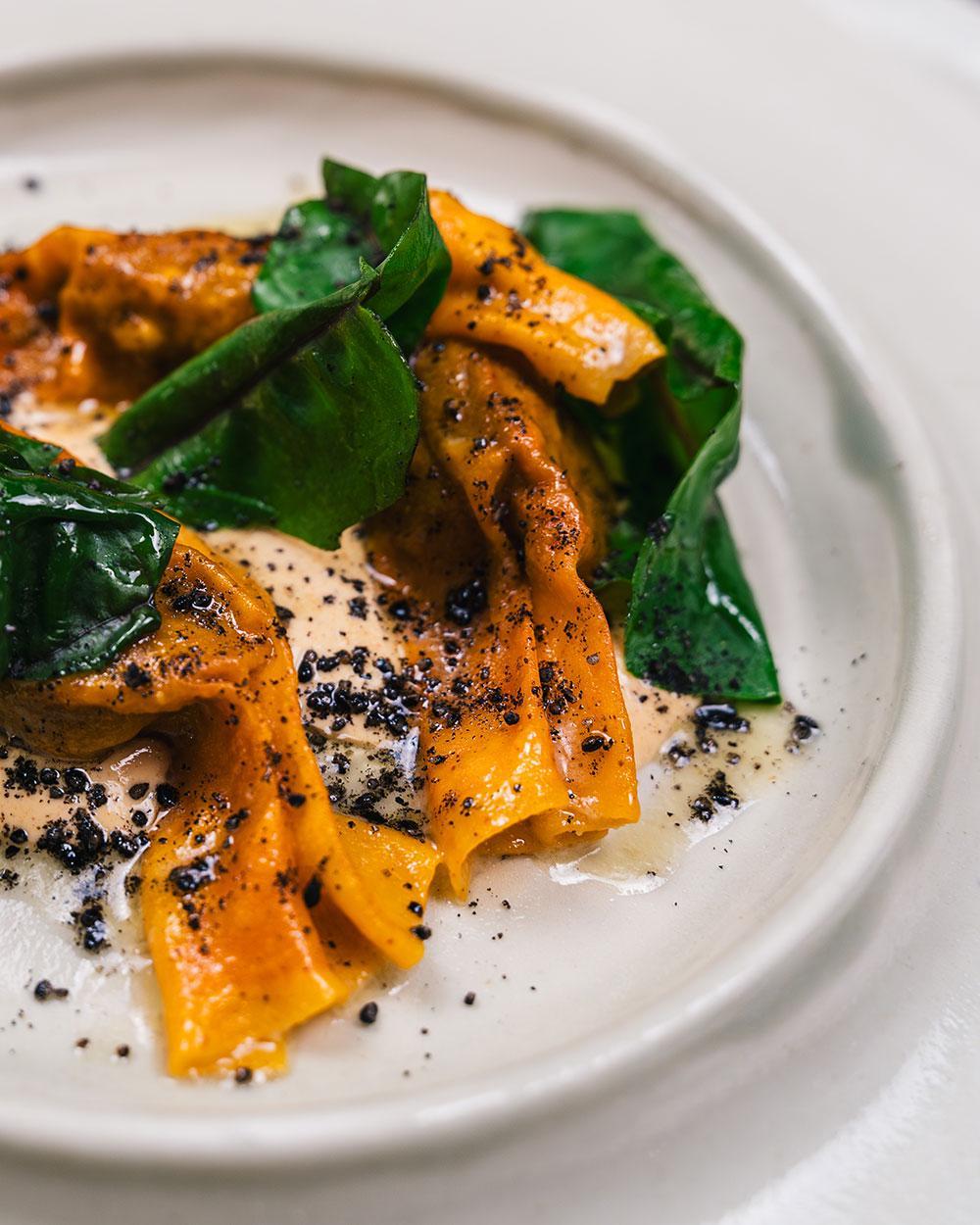
Ravioli-in-cortile
When are you happiest?
When I am stimulated. Contact with my family, friends, my staff and my guests. Human interaction keeps my mind young, nurtures my creativity and takes me to places I could never reach on my own.
When you’re not in the kitchen, where can you be found?
At home, with friends, going for a walk, on the terrace reading books, tending to my plants or travelling. I deeply love travelling. I believe it is one of the most stimulating activities, when done thoughtfully.
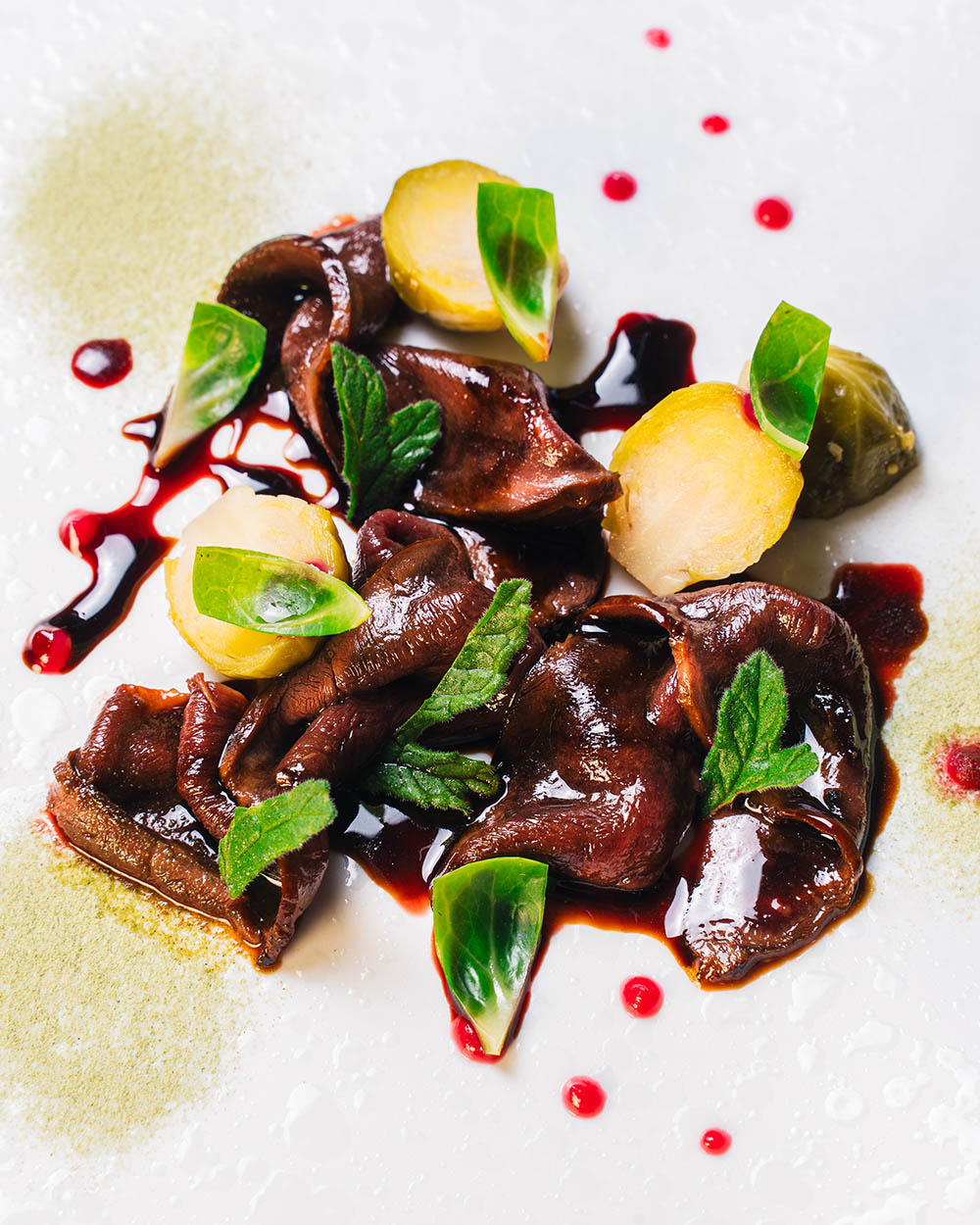
Veli-di-cuore-di-cavallo-cavoletti-di-bruxelles-e-melograno
Where is your favourite place to dine?
More than where, it is with whom. Family dinners with the table set, grandma bringing her polenta, mum serving the roast, dad opening a bottle of wine, uncles arriving with their delicacies, in-laws bringing a huge cake that smells like celebration.
Gatherings with old friends, the one who always barbecues because only he knows how, the one who plays music, always the same songs full of memories, the one who keeps everyone’s glass full, and the friend to whom strange things always happen.
I would not trade that for a Michelin-starred dinner or anything else.
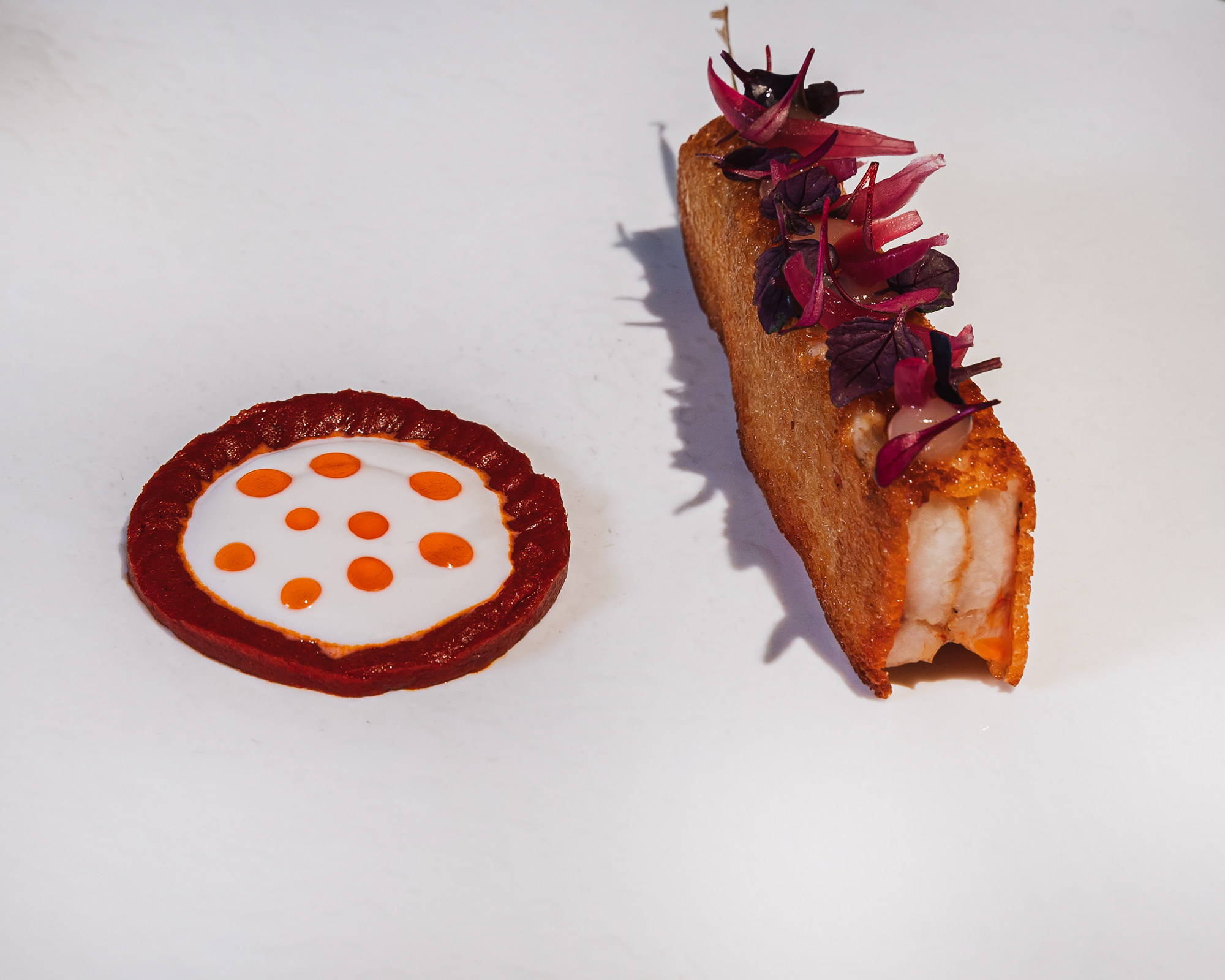
Toast-di-triglia-croccante-cocco-e-nduja
What’s your favourite takeaway or comfort food?
Bread and salami. (Pa’ Salam” – that’s how a local would say it!).
What makes the local food scene so exciting?
What makes it even more exciting is that not everyone knows about it. The people of Brescia and Bergamo have historically been somewhat reserved. This has allowed traditions to remain strong, but it has also limited openness to new ideas. Translating local cuisine for a wider audience is both a duty and a mission for a modern chef from Brescia.
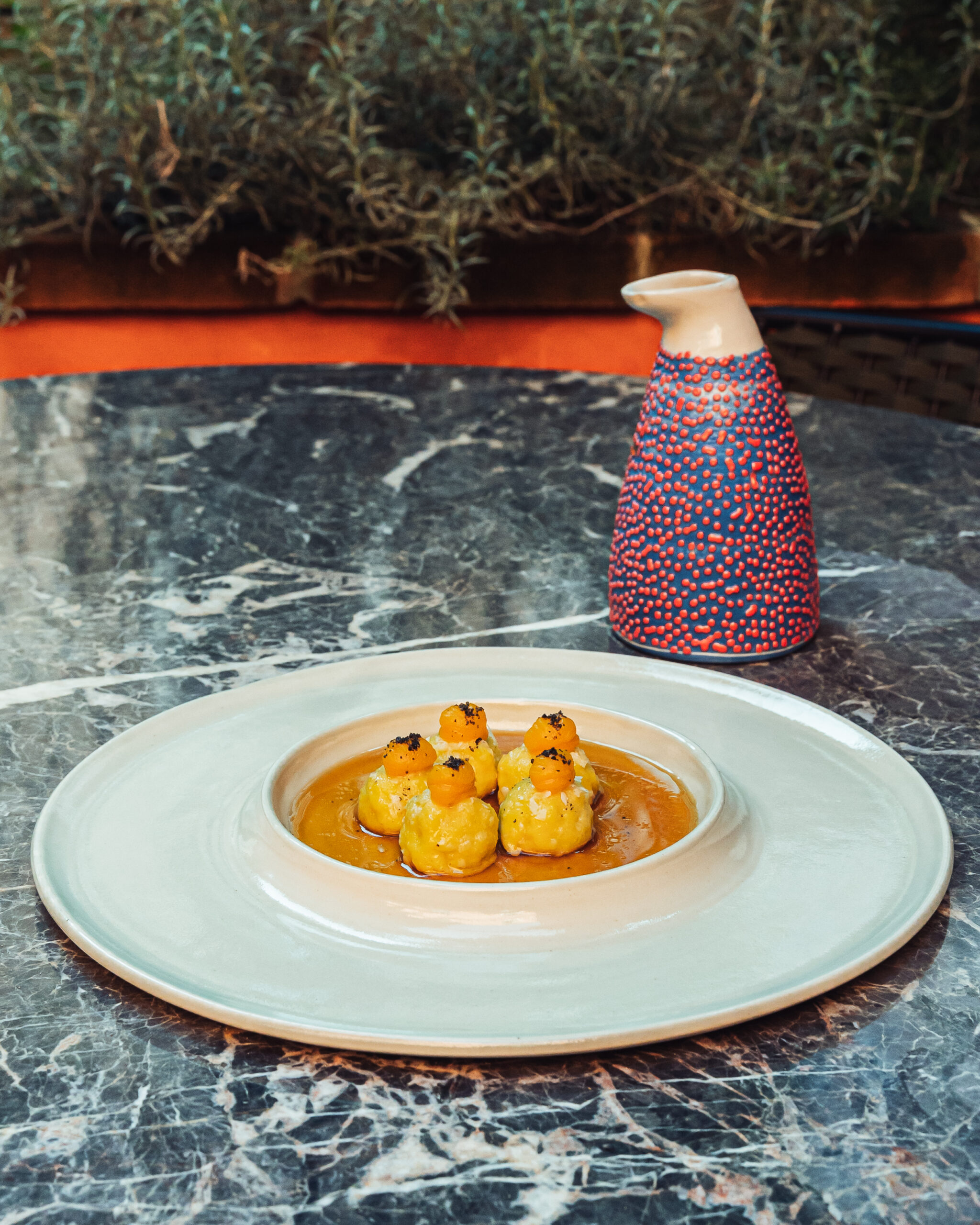
Gnocchi-incolla-autunnal
Which dish you’ve created are you most proud of and why?
“Gnocco incolla al Silter, pollen, honey, Fatulì foam.” It represents the synthesis of a journey that begins with my roots and family lunches, continues through years of evolution in taste, travels around the world and training in some of the best kitchens, and finally returns to the land that has given me so much and still has so much to offer.
You’re having friends over for dinner tonight. What’s on the table?
Tonight I will be having dinner with my family. There will be eight of us. I will prepare a risotto with lake perch and artichokes, followed by baked chub fish with capers and citrus fruits.
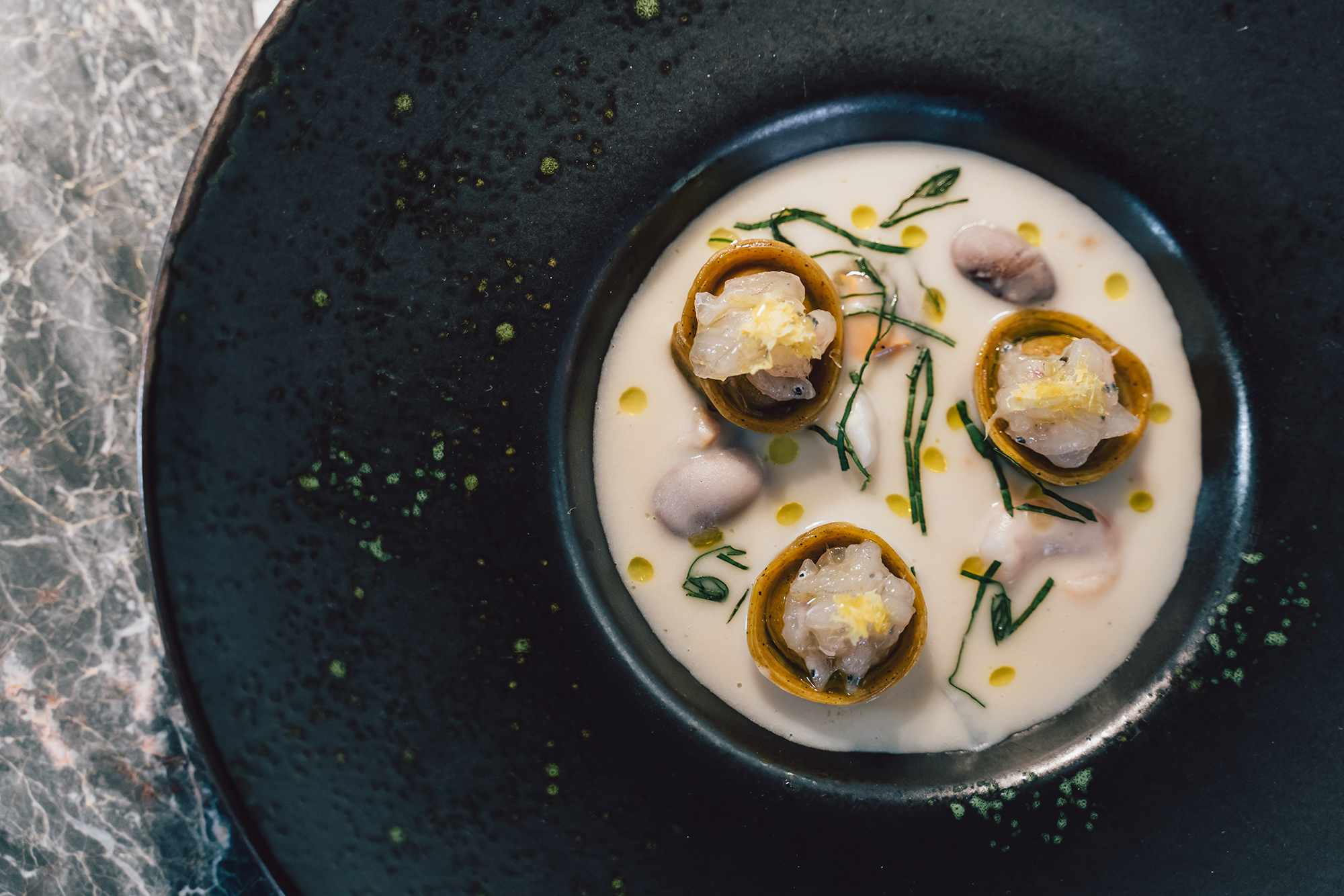
Ravioli-di-zuppa-di-pesc
Name your favourite city that has it all: food, culture, and nightlife.
The world is so diverse and offers so much that it would be reductive to choose just one city. Brescia is, of course, close to my heart. Then Venice, Salento, Florence, Lima, Osaka, Bangkok, Berlin and London.
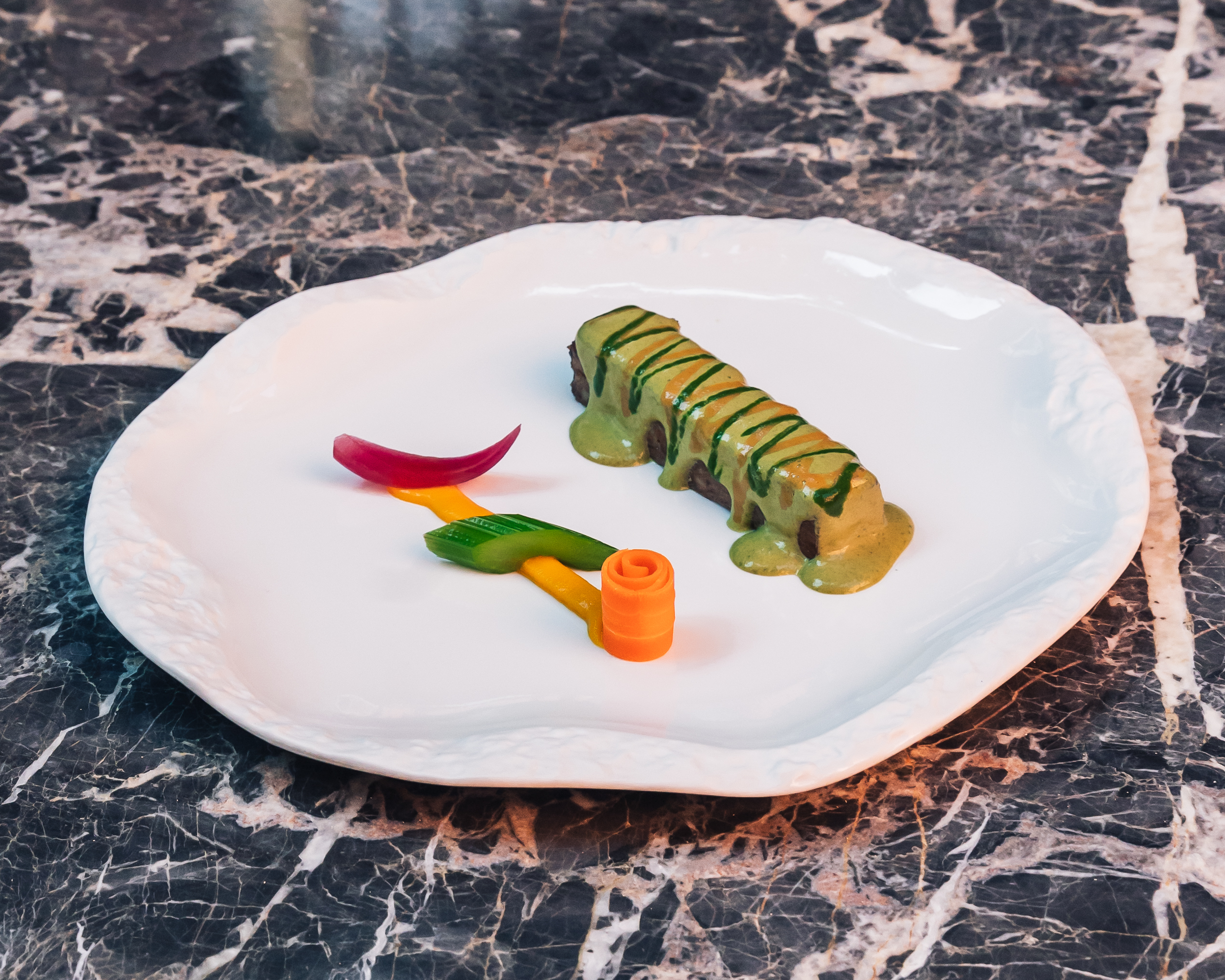
Coda-di-manzo-allolio
Can you tell us more about the cuisine at your restaurants?
The restaurants at the Grand Hotel Fasano differ in their offerings, but the goal is always guest satisfaction. At Magnolia Restaurant, guests can enjoy lunch under two centuries-old magnolia trees, with Mediterranean and international cuisine that is fresh, flavourful and light. It is the perfect lunch for a sunny day by the lake. For dinner at Osteria Il Pescatore, the menu focuses mainly on fish, complemented by a wide selection of high-quality local products and exceptional local cheeses. It offers a different culinary experience that must be discovered.
Over the years, I have absorbed knowledge and reshaped it according to my own taste and vision. I have combined yuzu with lake fish, mole with horse meat, curry with snails.
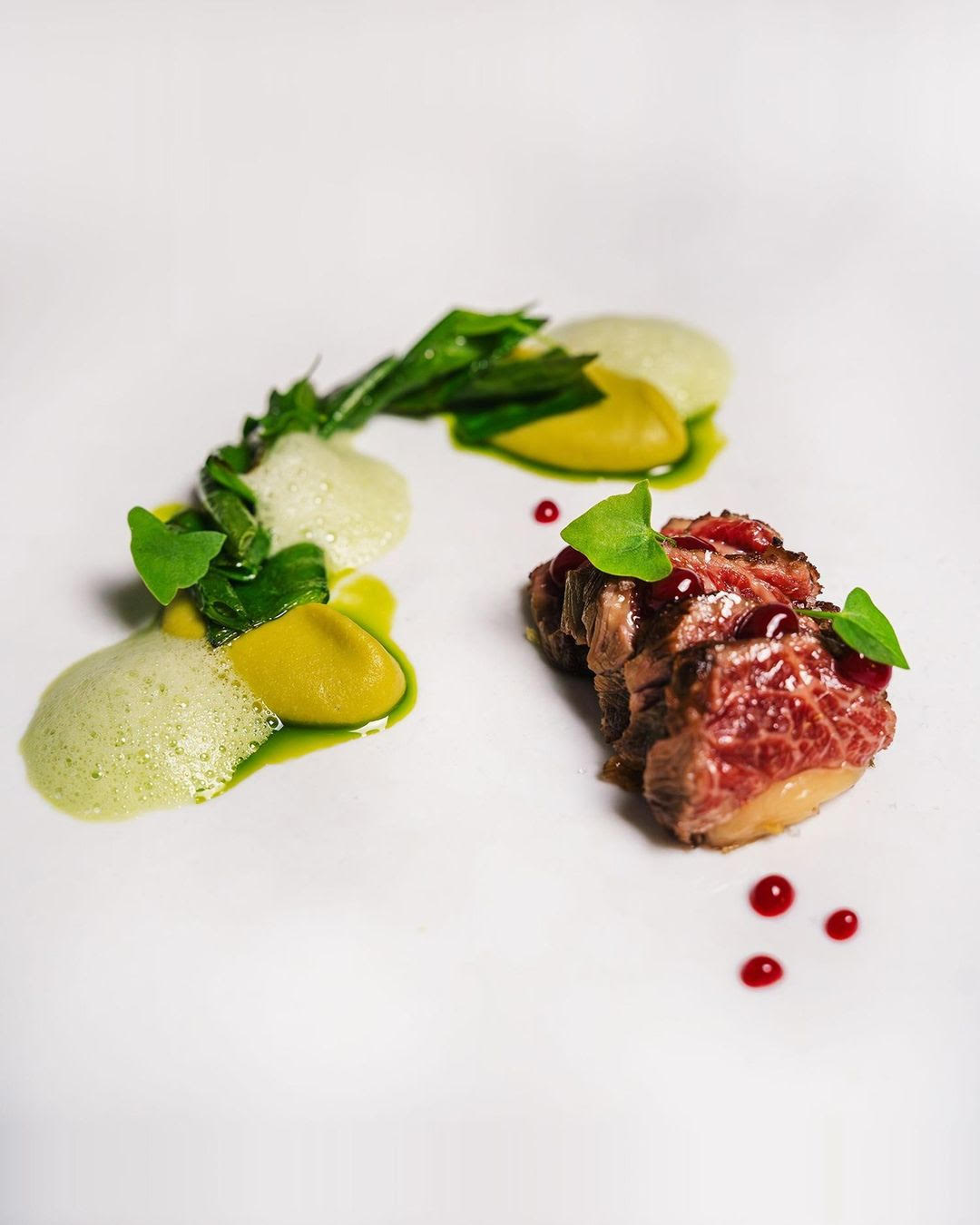
Horse flank, green beans, and plums
Ingredients
Meat
– 150-day dry-aged horse chuck, trimmed (45–50 g per person)
Broad Bean Purée
– 200 g peeled broad beans
– Salt
– Sugar
– Lemon juice
– Herb oil
Green Beans
– 100 g each of flat green beans and green and yellow snow peas
– Salt
– Olive oil
– Lemon pepper
Green Foam
– 500 g pea pods
Plum Cream
– 750 g plums
– 500 g cooked round red plum pulp
– 3 g salt
– 40 g sugar
– 20 g Fabbri amarena cherries
– 10 g shiro miso
– 8 g yuzu kosho
– 10 g white balsamic vinegar
– 8 g preserved lemon
Method
Meat
Trim the horse chuck, dry-aged for a minimum of three months, and portion into 45–50 g servings. Sear briefly on all four sides. Allow to rest wrapped in aluminium foil in a warm place, then slice thinly just before serving.
Broad Bean Purée
Blanch the peeled broad beans and blend in a Thermomix at 80°C until smooth. Pass through a fine sieve to remove the skins. Season with salt, sugar, and lemon juice, then emulsify with herb oil.
Green Beans
Blanch the flat beans and the green and yellow snow peas. Cut into bite-sized pieces (approximately 2 cm). At service, sauté quickly in olive oil and season with salt and lemon pepper.
Green Foam
Juice the pea pods and collect the liquid in a tall container. Immediately before plating, aerate with an immersion blender to obtain a light green foam.
Plum Cream
Arrange 750 g of plums on a baking tray and cook at 120°C with the oven door slightly ajar to allow moisture to escape. Bake until sufficiently dehydrated (approximately 1–2 hours, depending on the fruit). Peel and remove the stones.
Blend with:
– 500 g cooked round red plum pulp
– salt
– sugar
– Fabbri amarena cherries
– shiro miso
– yuzu kosho
– white balsamic vinegar
– preserved lemon
Blend until smooth and homogeneous.
Plating
Place the sliced horse meat at the centre of the plate and garnish with dots of plum cream and shield sorrel leaves. Arrange the green beans, peas, broad bean purée, and pea pod foam in a crescent shape around the meat. Finish with drops of fresh
extra virgin olive oil.

This work is licensed under a Creative Commons Attribution-NonCommercial-NoDerivatives 4.0 International License.